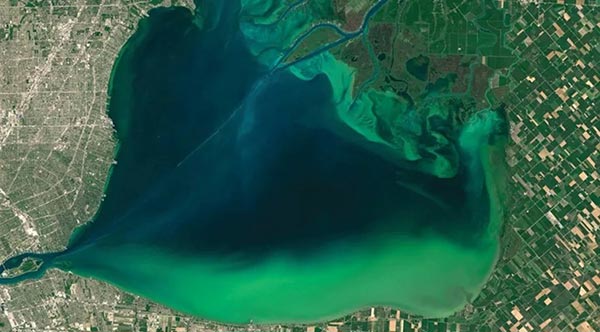
If you're dancing your way down to the lake shore for a day of fun in the sun and the water is a slimy green or red hue, it’s time to dance right back out the way you came. Chances are that lake is singing the bloomin’ blues and a harmful algal bloom is in full swing. Called HABs, these harmful algal blooms contain toxic cyanobacteria that make people, pets, and livestock sick. Satellite-based Earth observations have made it possible to sound an early warning bell on HABs, keeping would-be swimmers informed so they don’t have to play it by ear and risk exposure.
Led by scientists at the EPA with support from NASA, NOAA, and USGS, the Cyanobacteria Assessment Network (CyAN) processes satellite data. These data provide an early warning system that detects cyanobacteria in over 2,000 of the United States’ largest freshwater bodies. It provides state and local officials with real-time data to enhance decisions on where to focus their limited time and capacity for testing and mitigation efforts.