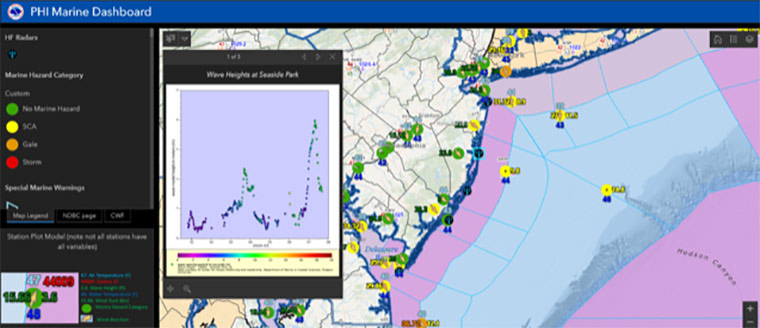
Forecasting ocean waves and current conditions is critical for safe and efficient maritime commerce, and for predicting coastal erosion. To provide accurate data for these marine forecasts, the National Weather Service (NWS) often relies on offshore buoys. However, these buoys can be expensive to maintain, and they have limited coverage in terms of geographical area. High frequency radar, meanwhile, is like a broader spotlight, offering coverage over a larger area. Researchers and modelers are now looking to expand the types of measurements they can make with radar instruments. Instead of just drawing on surface current measurements, they hope wave height, period, and direction measurements from radar data can be incorporated into forecasts.
Quick Facts
1. The coastline of the Mid-Atlantic U.S. is susceptible to coastal erosion and flooding due to wave action, particularly during storm events.
2. Coastal communities and infrastructure are at risk from a combination of storm surges, high waves, and rising sea levels.
3. High frequency radar is recognized as a cost-effective solution to augment the existing system of in situ current and wave measurements.